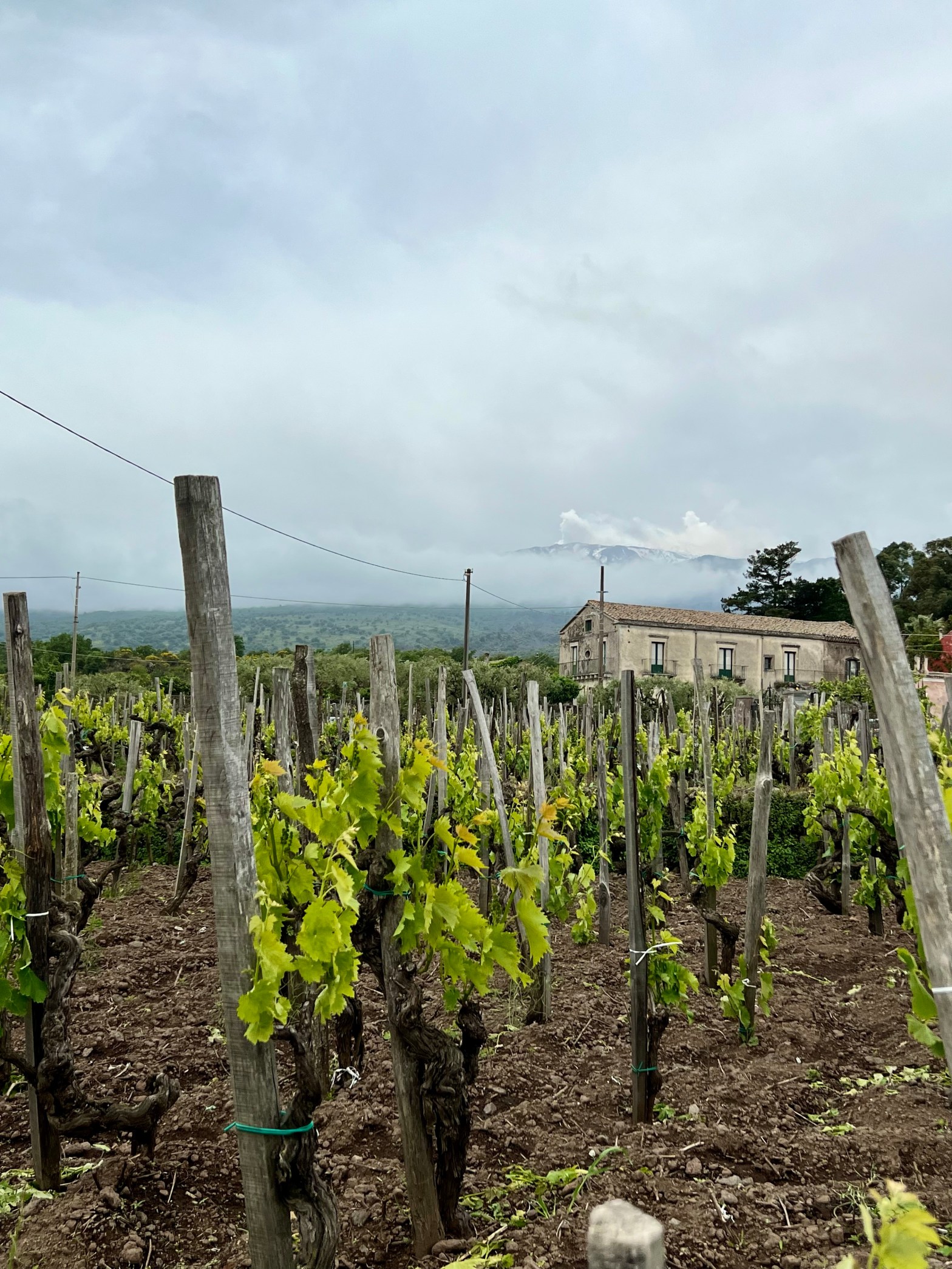
It’s a widely known fact that Italy is one of the world’s oldest wine growing regions. We often think of Piemonte, Tuscany, Emilia-Romagna, the list goes on. However, there is a very important part of Italy that has often been overlooked, until recently, and that is Sicily.
Wine is grown in many regions of Sicily, but one of the most important (and most cool) regions is Mt. Etna – the active volcano – and last May I had the chance to taste wine on Mt. Etna during a visit to Sicily with my family.
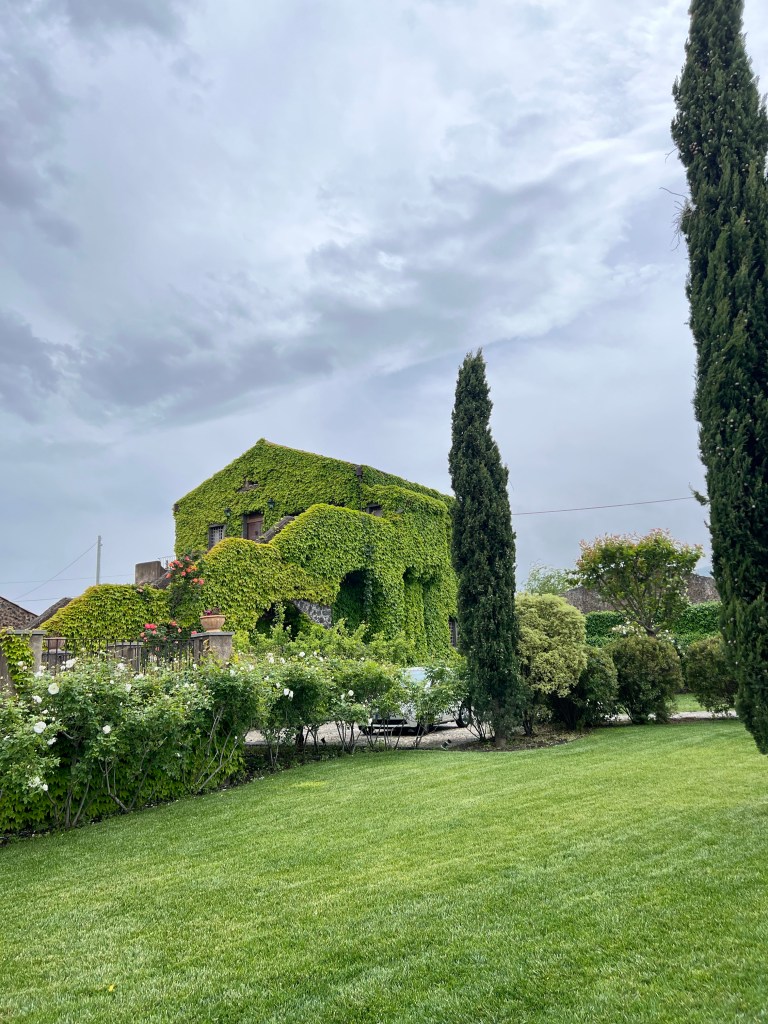
How active is Etna? “In the early 21st century a major eruption began in July 2001 and lasted several weeks. Other significant early 21st-century volcanic activity included the Strombolian eruptions of 2002–03, 2007, 2015, 2017, 2019, and 2020,” according to Britannica. In fact, Etna erupted on May 21st, just three days after we left the island, spewing ash on Catania and causing many flight suspensions.
When talking to the locals, they seem almost unbothered by it. It’s normal for them, something they learn to live with not in fear of. They described how after the latest eruption, the entire town of Taormina was covered in black ash, and how it took at least a month to clean up.
It’s one of those things where great beauty and great disaster go hand in hand. But for amazing wines, it’s a trade-off many producers are willing to make.
On our last day in Sicily, we decided to make the trek to the Etna wine region. It was about a one hour drive from our hotel in Taormina to the winery. It was an eerie drive, an overcast day, a day where Etna herself was active. We drove through tiny Sicilian towns that seemed almost deserted, as if everyone was preparing themselves to face another one of Etna’s episodes.
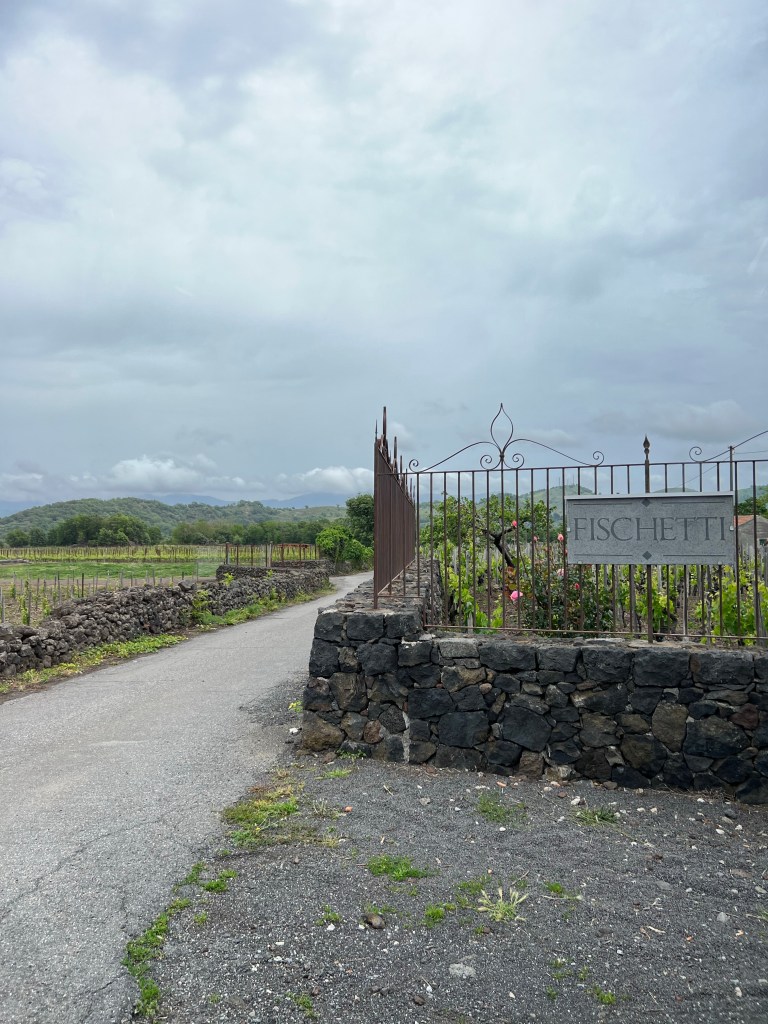
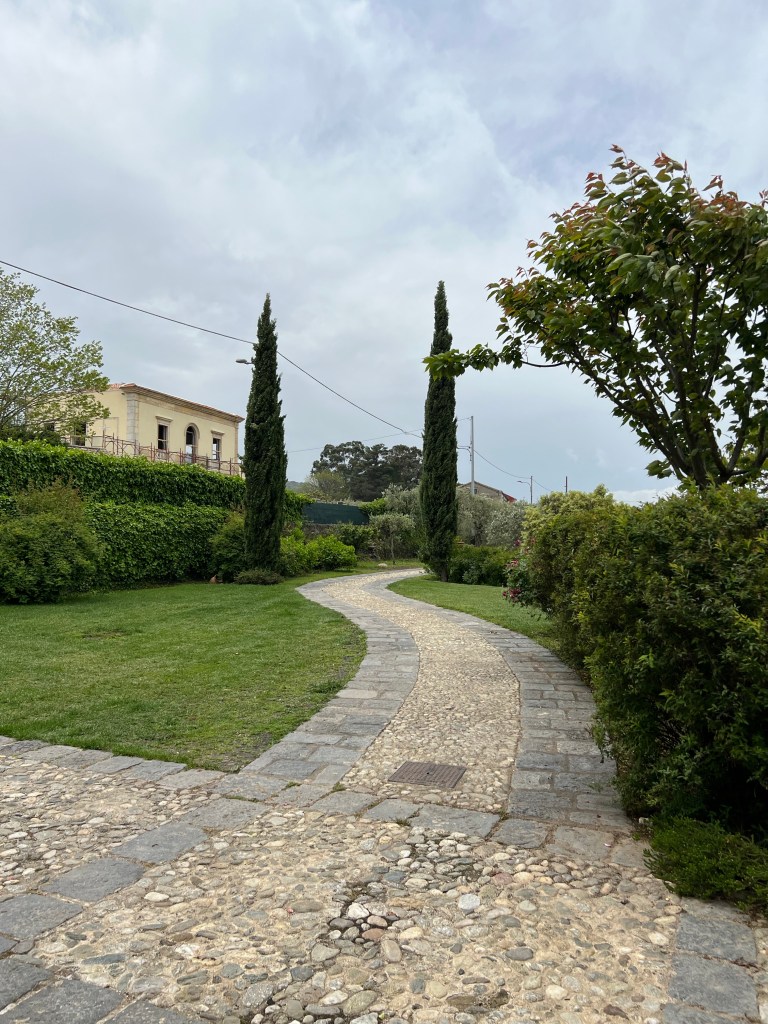
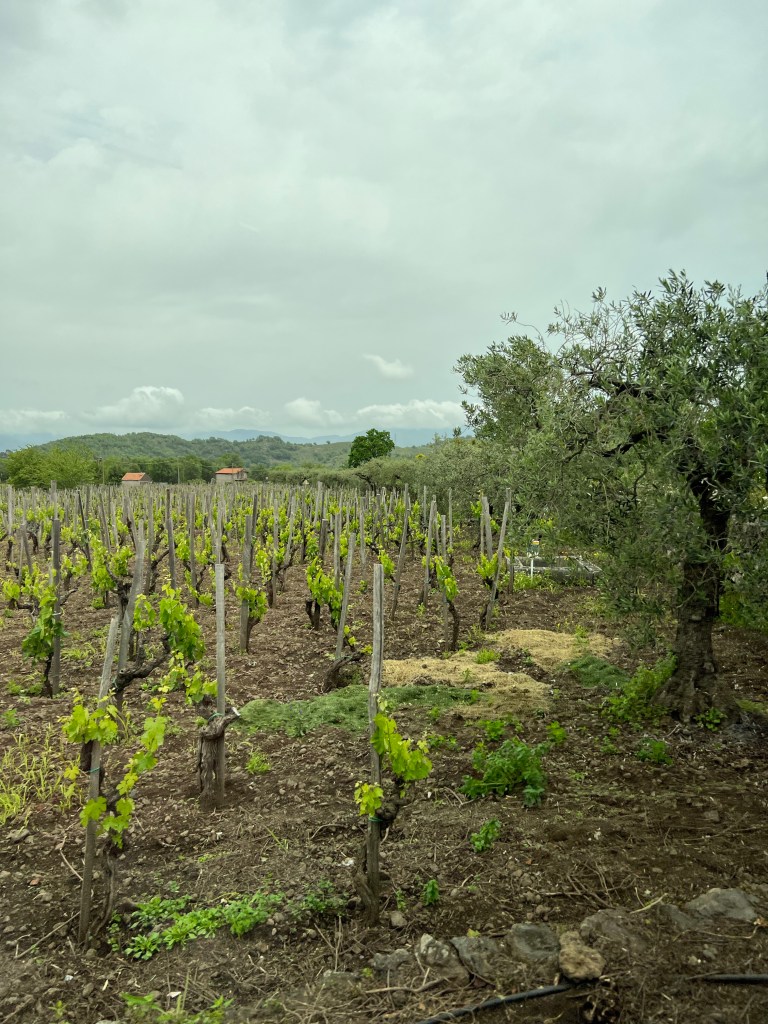
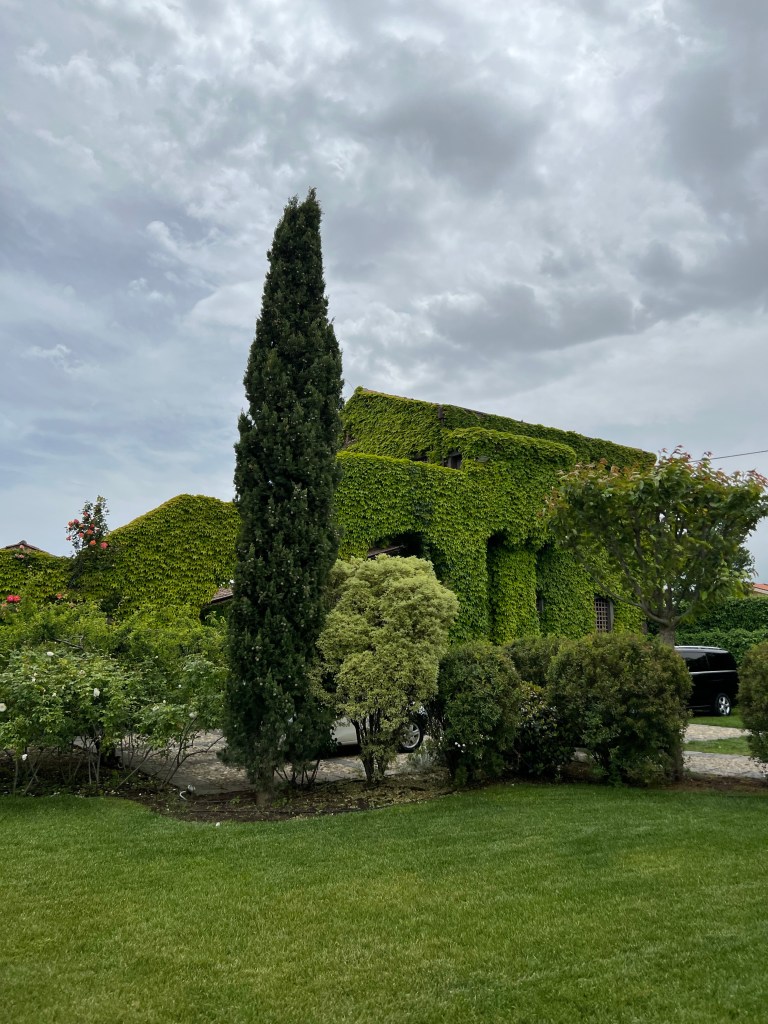
We visited Fischetti, the family vineyard that specializes in the native grapes of Etna. The entrance to the property was beautifully lush and the vines and herbs were in full bloom.
The majority of the estate’s vines are 80 – 100 years old, and they do rip out troubled vines and replant every year. No two vines are the same, and there is no trellising system unifying the vineyard either, creating a beautiful asymmetry that allows each vine to express its unique character.

This was a huge difference that I noticed between the producers in Etna and those in California. In the old world regions, you see less producers using use cookie cutter farming techniques regardless of each individual vine’s needs. The farming is tailored because each vine is unique – one vine can be perfectly healthy while its neighbor can suffer from a trunk-rotting disease.
Fischetti works with the nature and what they are given. They farm by hand and organically, grow the indigenous Etna grapes, and they also plant indigenous fruit trees that they don’t harvest – the ripe fruit drops, becoming incorporated back into the earth or eaten by animals, giving nutrition back to the soil. The fruit also provides birds with a delicious (and organic) distraction away from the vines.
The red grapes grown are Nerello Mascalese (very genetically close to Sangiovese) and Nerello Cappuccio, while the whites are Carricante and Catarratto. Nerello Mascalese gives the wine an orangey-red tinge on the outer ring in the glass and a reddish-brownish hue with a ruby-red color in the middle.
The property also boasts a 160-year old Nerello Mascalese vine that is used for the reserve red wine.
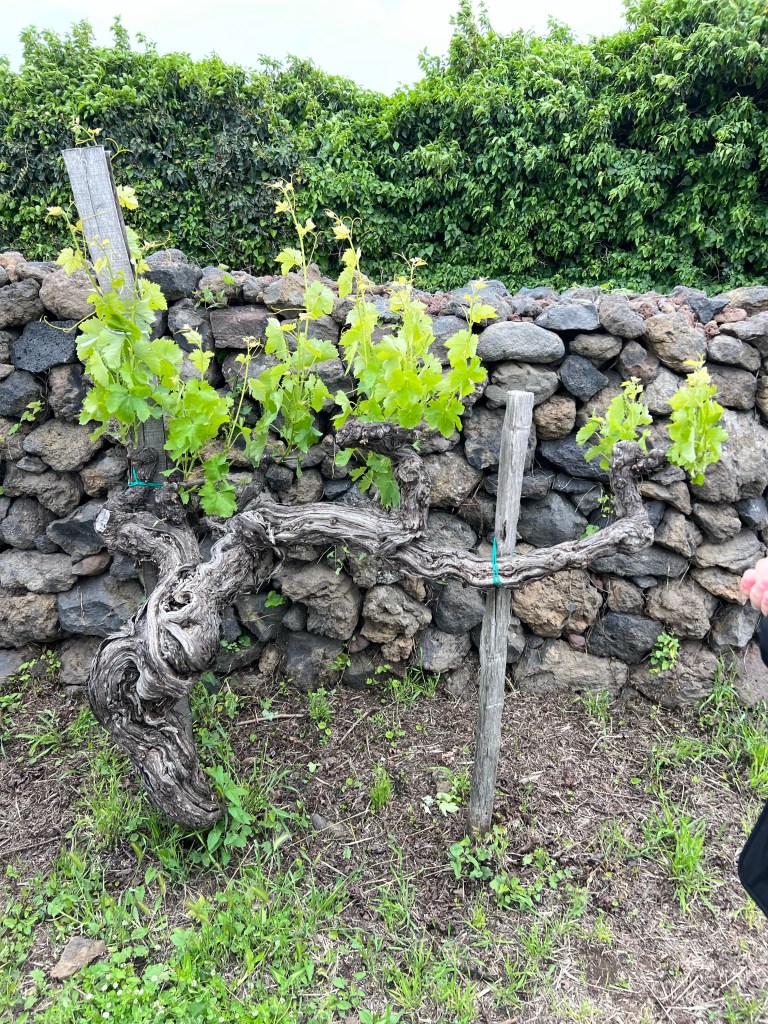
What makes Etna such an incredible wine growing region is of course the volcanic soil. It doesn’t get much more volcanic than planting vines literally on an active volcano. In addition, Etna winemakers keep trying to plant grapes farther and farther up the volcano just to see how far they can grow wine.
At Fischetti, the terroir is a mixture of clusters of lava stones, sand and minerals. It gives a minerality sensation to whites and makes for an earthy, medium-bodied but still powerful red.
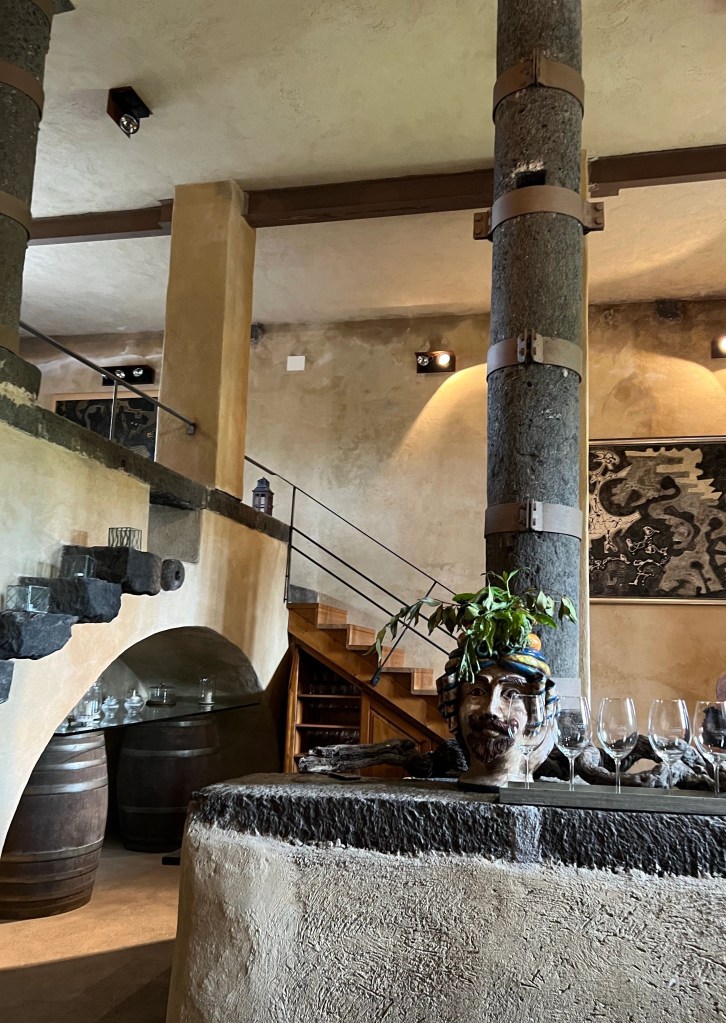
After the tour of the vineyard, we moved on into the tasting room, which was literally built around the 200-year old cellar. The walls showcased the volcanic rock and featured paintings painted by the nonna of the Fischetti family.
Our table was underneath the 200-year old wooden press (that was actually used until 1968), and from here we had a view of the rest of the old equipment processing structures.

Essentially, there was a lofted platform where the grapes would get stomped, and then channels down through which the juice would flow into a pit on the ground level. The pit acted as a filter – the sediments would settle at the bottom of the pit and the juice on the top would flow through channels into the casks, amphora, or whatever fermentation vessel was used.
The winery used to combine the white and red grapes in their winemaking, a legal process until the 1970s when the government began putting in place more strict winemaking regulations in order to improve the quality of Sicilian wine, which had been notorious for bulk wine and had not been taken seriously by the rest of the wine growing world.
During this time, the previous owners of the winery actually ceased winemaking operations because they couldn’t keep up with the new winemaking regulations. The facility was abandoned for 40 years until the Fischetti family, namely the father of our host, took it over and installed the new production system.
The red wine we tasted was 80% Nerello Mascalese and 20% Nerello Cappuccio, and it ages for 2 years in French oak before bottle. Etna Rosso DOC wines must have a minimum of 80% Nerello Mascalese.
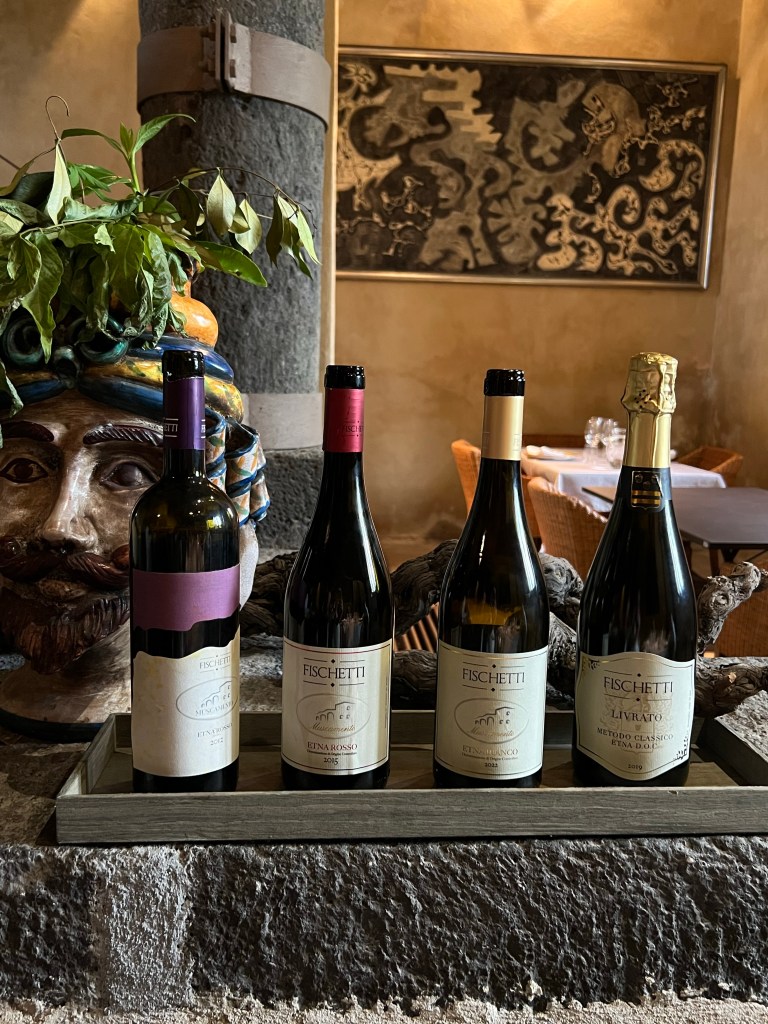
The white was floral, had expressive minerality and was my overall favorite of the lineup.
We had a delicious pairing of local cheeses, salami, olives, fresh tomatoes and sausages made with cheese and pistachio inside. All of the wines paired perfectly with each bite, which makes sense given that they are all locally produced from the same terroir.

It was one of the most unique, memorable and educational wine tasting experiences and I can’t wait to return for more Sicilian wine tasting hopefully one day soon.
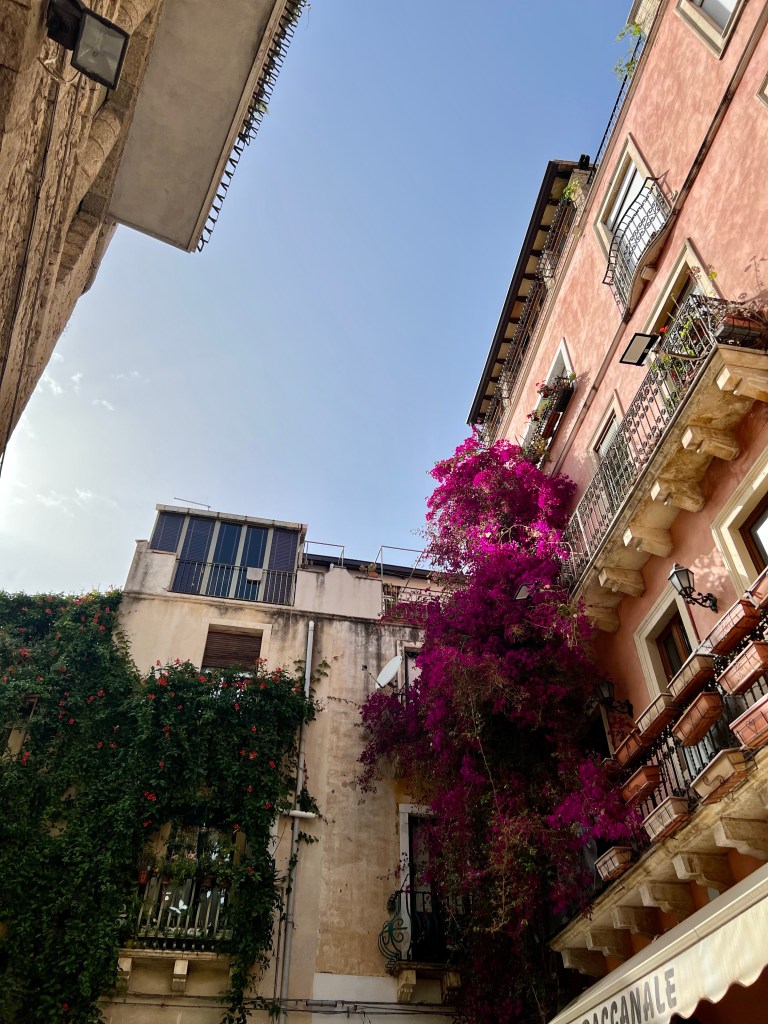
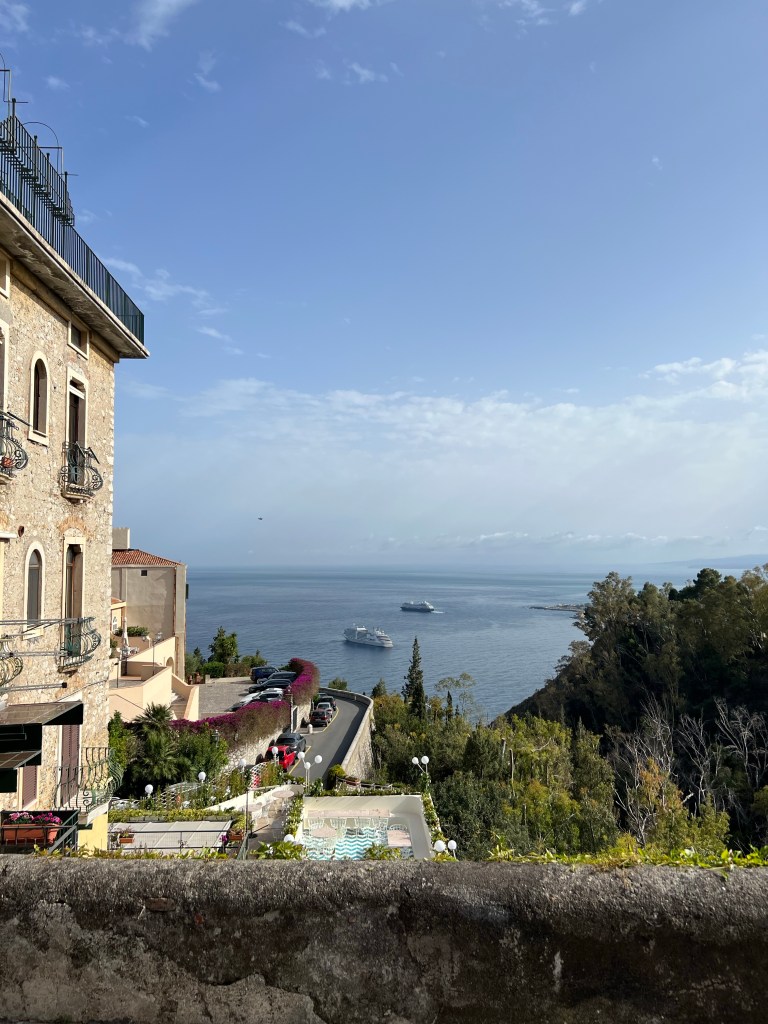
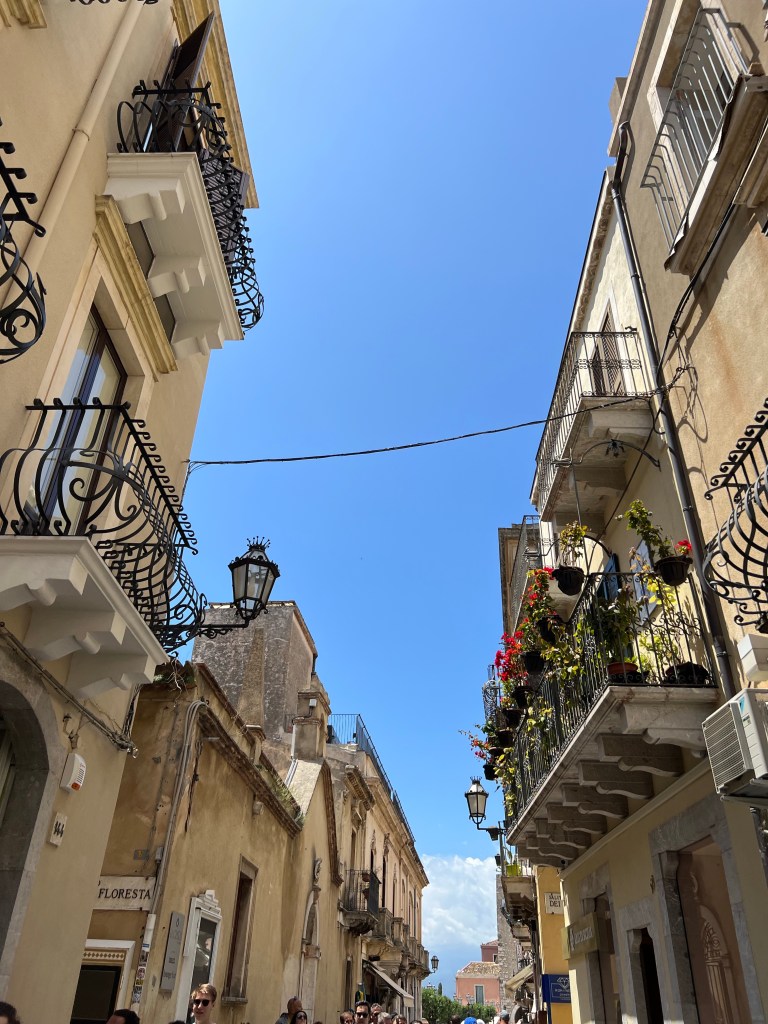
More snapshots from Sicily…




 The Younger Wine